June 24th, 2007 by
goregt
If you're new here, you may want to subscribe to my RSS feed or Newsletter for additional free sculplting tips. Thanks for visiting!
Changing the design of the horns
The original horns on this sculpture have been bugging me for some reason. Although I was not finished with sculpting them, I just didn’t love the way I had designed them. I have been wanting to change the horns around a bit but was not exactly sure what I wanted to do.
So after setting aside the original design for a few weeks I decided to tackle the horns one more time. I like to make things up on the spot when I sculpt so the first step for me was to smooth out the original design and just start adding clay to the piece.
* This sculpture is created with Super Sculpey.

 |
Okay, the first step is to build out the foundation (starting to see a pattern here from the previous lessons).I build out the rough shape that I want to use on my horns. For me it is best to sculpt both horns at the same time. In the past I have sculpted things like this separately and ended up having issues trying to make them look symmetrical. |
|
|
 |
I draw some line into the clay to start the design that I will use for my horns. |
|
|
 |
Continuing the pattern to the entire horn. |
|
|
 |
The basic detail has now been added to both horns. |
|
|
 |
Running with my imagination a bit I start to add little bumps and warts to my horns. A lot of times changes like these just come to me while I am sculpting. I usually will experiment a little and if I like the changes I will keep them and if I don’t, I can quickly undo them. |
| |
|
 |
And a look at both of the horns with the bumps applied to them. |
| |
|
 |
A black and white picture of the horns so that we can better see the details. The horns still are not complete since I need to add details to the ends of the horns. I’m closer to completion now on the horns and I am a lot happier now with the look that the new horns create for this piece. |
Next lesson - Spicing up the neck
Previous lesson Adding veins to the arm
Back to the series home page
tag:clay horns polymer clay sculpting Sculpting Tutorials tutorialPopularity: 89% [?]
Newsletter Archive
Sculpting Again (Sent on May 10, 2008) Favorite Sculpting Tools (Sent on August 25, 2007) 1
2 3 Next »
Posted in Sculpting Tutorials |
No Comments »
June 24th, 2007 by
goregt
Finish blocking off the arm
In the previous lesson we built a solid foundation for the left arm. We are now at the stage where it is time to start adding all the little details. The steps in this lesson will build off of the rolling snakes and sculpting veins tutorials (I recommend visiting those lessons first).
We will not finish the sculpting on the arm in this lesson but by the end of the page the left arm should look like it is getting close to completion.
* This sculpture is created with Super Sculpey.

 |
Using one of my sculpting tools I blend the snake of clay into the arm. |
| |
|
 |
I continue to blend the clay using a little rubbing Alcohol and a stiff paint brush. |
| |
|
 |
I use the same steps to detail the skin as I used in the torso skin details lesson. |
|
|
 |
Again using a stiff brush and rubbing Alcohol I blend in the details. |
|
|
 |
I am sculpting the shoulder at the same time as the arm so I make sure to add details to both body parts. For me sculpting the arm and shoulder together helps create a more unified piece. |
|
|
 |
Just as before I blend the veins into the shoulder using one of my sculpting tools. |
|
|
 |
Texture the skin, smooth out the veins and skin with Alcohol and there you go. The details are a little too soft looking for my liking so I will most likely let the arm sit for a bit while I work on something else. I’ll come back to the arm later to sharpen the details.Tip: Sometimes when smoothing out the clay you can over use the Alcohol. The clay starts to become tacky and hard to work with. If this happens just let the clay sit for awhile so that everything can dry out. |
Next lesson - Changing the design of the horns
Previous lesson Finish blocking off the arm
Back to the series home page
tag:detail sculpting Sculpting Tutorials tutorial veinsPopularity: 88% [?]
Newsletter Archive
Sculpting Again (Sent on May 10, 2008) Favorite Sculpting Tools (Sent on August 25, 2007) 1
2 3 Next »
Posted in Sculpting Tutorials |
No Comments »
June 17th, 2007 by
goregt
Finish blocking off the arm
In the previous lessons covering the arm on this sculpture the goal was to get a basic shape for the right arm. Now it is time to start refining the shapes so that we can begin working on the details for the arm. A lesson or two back I made a comment that the arm was going to look like a mess for awhile. This is the lesson where the arm starts really looking like a muscular arm.
* This sculpture is created with Super Sculpey.
 |
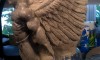
Just as before I draw in lines to represent the individual muscles of the arm. |
| |
|
 |
I start adding a little clay here and there to bulk up the individual muscles. The key is to make the upper arm flow naturally into the upper forearm. I heavily rely on images off arms in this position during this stage of the sculpting process. |
| |
|
 |
I know the shape looks a little strange right now but in a couple more pictures it will all makes sense. See how I blend the muscles from the upper to the lower arm? |
|
|
 |
Still bulking out the sides, front and back of my arm. Right now I am only focusing on the upper arm and upper portion of the forearm. |
| |
|
 |
Very rough image but the progression is really coming along now. All I have to do now is smooth and round out the muscles in the arm. |
| |
|
 |
Using a paint brush and rubbing alcohol I smooth out all the individual muscles in my arm. Notice how the center muscle ties nicely into the upper forearm. I still have a lot of work to do but the foundation is pretty much complete for this arm. |
|
|
 |
A view from a different angle. |
Next lesson - Adding veins to the arm
Previous lesson Sculpting the Forearm
Back to the series home page
tag:polymer clay sculpting Sculpting Tutorials tutorialPopularity: 88% [?]
Newsletter Archive
Sculpting Again (Sent on May 10, 2008) Favorite Sculpting Tools (Sent on August 25, 2007) 1
2 3 Next »
Posted in Sculpting Tutorials |
1 Comment »
June 15th, 2007 by
goregt
Starting to sculpt the forearm
I’m still in the bulking stage and it will probably take another lesson or two before the arm looks like anything worth talking about. The bulking stage is probably my least favorite stage in the sculpting process because whatever is being “bulked out” just looks like a big blob of goo. Nothing impressive here but it is important to show these steps before we move onto the detailed sculpting phases.
* This sculpture is created with Super Sculpey.

 |
Before I move too far along I think it is best to start adding a little clay to where the elbow and forearm will be. The first step is to wrap the wire with aluminum foil and from there I will add my clay. |
| |
|
 |
Starting to add the clay to the forearm now. Again, as with the upper arm, look at images on the web to see what muscles look like to get a feel on how to sculpt the forearm.Note: I messed up and added too much aluminum foil to the wire. It is fixable but required me removing some of the clay and starting the bulking process all over. I guess one lesson learned is that less is more when bulking out the clay. You don’t have to add wire to the aluminum foil but it seems to help the clay stick better to the wire (for me at least) and cuts down on the cost of the clay. |
|
|
Next lesson - Finish blocking off the arm
Previous lesson Sculpting the arm
Back to the series home page
tag:forearm polymer clay sculpting Sculpting TutorialsPopularity: 74% [?]
Newsletter Archive
Sculpting Again (Sent on May 10, 2008) Favorite Sculpting Tools (Sent on August 25, 2007) 1
2 3 Next »
Posted in Sculpting Tutorials |
No Comments »
June 15th, 2007 by
goregt
Starting to sculpt the arm
OK, we have a good start on the face, made pretty good progress on the torso and sculpted the fiddle and a hand. Now it is time to start making the Fiddler look like an actual fiddler. I’ve been wanting to attach the fiddle to my sculpture for some time now but in order to do so I need to first build out the arm.
Now I started the beginning stages of the arm some time ago so the torso in some of the images isn’t as far along as it is in some of the more recent tutorials. The first two images in this tutorial were taken quite awhile back while the rest of the images were taken recently. I had plans to do the arm earlier in this series but decided it would be best to put it together after the fiddle was completed.
* This sculpture is created with Super Sculpey.
 |
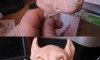
My first step is to map out the length of the arm with my armature wire. I leave my wire a little long on the end (where the hand will go) for now but I want to make sure the that length from the shoulder to the elbow is accurate. Clay will be applied to all areas of the wire so I plan out that my arm will be a little longer then what the bent wire indicates. Tip: Think of the wire as part to the skeletal system in that it gives support the the overall piece. |
|
|
 |
Sometimes I like to use just regular Sculpey to bulk out my clay. The regular Sculpey is cheaper then the Super Sculpey that I use. Another advantage is that it is pretty squishy so I can quickly bulk out the piece. I’ll add Super Sculpey to the top of the bulked out arm once I get ready to start sculpting.Note: I’m not a fan of using regular Sculpey for detail work since it is a little tacky and just too soft of a sculpting medium for me. |
| |
|
 |
I’m still bulking out the arm but now I am working with Super Sculpey. I’ve already looked at different muscular arms on the internet to get an idea on how the individual muscles fit together. In this picture you can start to see that I have etched out where the individual muscles of the arm will go. Doesn’t look like much yet but it will all make sense in a few lessons down the road. |
|
|
 |
The muscles in the arm form different shapes as they are extended and flexed. The biceps (front of the arm) bulge forwards and peak near the center of the muscle as the hand is brought towards the shoulder. The triceps (three muscles in the back of the arm) also bulge out towards the back and sides when the hand is pulled towards the shoulder. The best way to get an understanding of the anatomy of the arm is to just look up as many images as possible on the internet. I’ve already written a tutorial on using Google Images to help improve your sculpting and if you have missed the article then you can read it here. |
|
|
 |
Still bulking out my arm…. I know, I know it looks like a big mess right now but stick with me and it will all make sense in the near future. |
|
|
 |
While I work on the arm I also like to work on bulking the shoulder too. This helps my keep the tie in where the should meets the arm more fluid. |
Next lesson - Sculpting the Forearm
Previous lesson Attaching Hand To Fiddle
Back to the series home page
tag:arm free tutorial polymer clay sculpting Sculpting TutorialsPopularity: 12% [?]
Newsletter Archive
Sculpting Again (Sent on May 10, 2008) Favorite Sculpting Tools (Sent on August 25, 2007) 1
2 3 Next »
Posted in Sculpting Tutorials |
1 Comment »
June 14th, 2007 by
goregt
Attaching the Hand to the Fiddle
Hands are tricky so I like to sculpt them individually when possible and add them to the sculpture as a separate piece. In this tutorial I am going to take the hand from the previous lesson and attach it to my already baked fiddle.
I’m approaching this sculpture as if it was a puzzle adding each section together one piece at a time. What is nice about this step is that I am that much closer to adding the fiddle to my Fiddler. The fiddle really brings out the feel of the piece and I am really looking forward to seeing it all put together.
* This sculpture is created with Super Sculpey.

 |
We are adding a non-baked hand to a baked fiddle so apply a thin layer of Vaseline to the neck of the fiddle (where the hand will be placed).Hint: Apply Vaseline over a larger section of the baked clay than you plan to sculpt with (just in case you underestimate the space needed for the new or non-baked clay) |
|
|
 |
Next I add the hand and start working on the finger placements. The hand looks a little rough here but that is OK. The next step is to start smoothing out the clay and adding the details. |
|
|
 |
Refer back to the sculpting a hand with polymer clay tutorial on how I detail out a hand. It takes a lot of time for me to build out and detail a hand so don’t let the few images in this tutorial fool you into thinking that this is quick and easy. I can sometimes spend days going back and forth on a hand until I get it where I like it. The key is to keep at it until you are satisfied (no matter how long it takes). |
|
|
 |
And a little snap shot of what my hand looks like when the detailing is done. I’ll bake the hand and fiddle to preserve the sculpture. The next step is to create an arm for my hand and fiddle. |
Next lesson - Sculpting An Arm
Previous lesson Sculpting Fiddlers Hand
Back to the series home page
tag:art fiddle hand polymer clay tutorial sculpting Sculpting TutorialsPopularity: 13% [?]
Newsletter Archive
Sculpting Again (Sent on May 10, 2008) Favorite Sculpting Tools (Sent on August 25, 2007) 1
2 3 Next »
Posted in Sculpting Tutorials |
No Comments »
June 9th, 2007 by
goregt
Defining the face
Sculpting faces is very time consuming and something that I work on throughout the entire sculpting process. However, before I begin another area of the sculpture I like to get a good foundation for the face. I use to save the face for last only to discover that I ended throwing the entire sculpture off when the face was completed. The problem is that the face would end up too big or two small for my piece. I just recently started sculpting the face first and I think it has made a huge improvement in my overall work.
My goal is to knock out at least 80% of the face before I begin another area of the sculpture. I will continue to bounce back to the face during the sculpting process. Even though the majority of the work is done up front, I still end up finishing up the face around the end of the piece. However the foundation was already built so the only thing left at the end is perfecting (to the best of my ability) the little details.
* This sculpture is created with Super Sculpey.
 |
When sculpting faces I like to first block them out and then build out all the little features. In this pic I am starting to build out the shape of the brow. If you look at the picture you will see the two balls of clay above the nose. I will use these to help define the shape above the eyes. I simply add a little clay, do some sculpting, step back and see if I need to add more clay to build out the shape. |
| |
|
 |
Building out the forehead now. |
| |
|
 |
I have already mentioned this in several tutorials but to repeat always periodically check your sculpture in a mirror. The mirror is a great tool to use to make sure there are not any symmetry issues. |
|
|
 |
I have smoothed out the face with alcohol and it is starting to take shape now. I still have a lot of work to do on all of the facial features but I am beginning to get an idea of what my tribal lady is going to look like. |
|
|
 |
Time to add the eyes. I am going to sculpt the eyes differently on this piece then the Fiddler series but the beginning process is the same. |
|
|
 |
I build out the eyes using most of the steps in the sculpting eyes tutorial from the Fiddler series. The key difference between this sculpture and the Fiddler is that I will not create a hole for the pupil and the iris. I am going to just create a hole for the pupil and I carve out a circle in the clay to represent the iris. |
|
|
Next lesson - Sculpting the tribal torso
Previous lesson Sculpting a tribal face
Back to Indigenous Allure home
tag:sculpting details Sculpting Tutorials super sculpey tribal facePopularity: 14% [?]
Newsletter Archive
Sculpting Again (Sent on May 10, 2008) Favorite Sculpting Tools (Sent on August 25, 2007) 1
2 3 Next »
Posted in Sculpting Tutorials |
No Comments »
June 6th, 2007 by
goregt
Sculpting A Tribal Face
I’m going to put the tutorial for this series together a little differently than the other tutorials. Since I am doing a series I want to show the entire sculpting process. I’m aware that some of the tutorials will be a little redundant but I think it takes away from the series if I do not show the entire sculpting process from beginning to end.
So to give you an example of what I am talking about I went into detail on how to sculpt a face in the Fiddler sculpting series. Instead of reinventing the wheel for this series, I will just show a series of pictures that give step-by-step visual instructions of the sculpting process. Just read the photos like you would a book from left to right. I will switch to my regular format if there is anything that I feel needs additional instructions.
*Tip: Hovering over the picture should give you a brief description of what I am doing at that stage.
** This sculpture is created with Super Sculpey
Next Lesson - Tribal Face Details
Back to Indigenous Allure home
tag:art polymer clay Sculpting Tutorials sculpture scupting tribal facePopularity: 18% [?]
Newsletter Archive
Sculpting Again (Sent on May 10, 2008) Favorite Sculpting Tools (Sent on August 25, 2007) 1
2 3 Next »
Posted in Sculpting Tutorials |
2 Comments »
June 4th, 2007 by
goregt
Sculpting the Fiddler’s Hand
I already have another tutorial about sculpting a hand with polymer clay but the images were taken with my old camera and I felt this was a good opportunity give an older tutorial a fresher look. I’m only going to create a rough hand since I will later attach it to the fiddle. Hands can be a little tricky to sculpt so the key here is to spend as much time as necessary to get the sculpting down correctly.
If sculpting hands come naturally easy to you then a big kudos to you. I myself still find the hands and eyes the most difficult things to sculpt. However, I have improved because I have invested those long hours making sure that I got everything down correctly.
* This sculpture is created with Super Sculpey.
 |
Roll out a ball of clay and four snakes. The ball will be used for the palm and base of the hand while the tubes of clay, or snakes, will be used for the fingers. |
| |
|
 |
Using a sculpting tool, or your finger, blend the base of the fingers into the ball of the clay |
| |
|
 |
I’ve now added another snake of clay for the thump. I add a little more clay to the base of the hand, smooth everything out and before you know it I have a pretty good outline of a hand. |
|
|
 |
I add little balls of clay that will end up being the knuckles on my hand. The snakes at the bottom will represent the bones in the hand. |
|
|
 |
I’ve carved little lines in the hand for emphasis for the knuckles and finger nails. I’m not worried about getting the details exactly right at this stage, my goal is to get a good idea on where everything is located. I then use a brush with alcohol to smooth everything out. |
|
|
 |
The little snakes of clay here will be used for the veins in my hand. |
|
|
 |
And now we have a good rough sculpt for my hand. I’m going to be bending the fingers and shaping the hand around my fiddle in the next tutorial. |
Next lesson - Attaching Hand To Fiddle
Previous lesson Detailing the Scroll
Back to the series home page
tag:polymer clay tips sculpting hand tutorial Sculpting Tutorials super sculpeyPopularity: 11% [?]
Newsletter Archive
Sculpting Again (Sent on May 10, 2008) Favorite Sculpting Tools (Sent on August 25, 2007) 1
2 3 Next »
Posted in Sculpting Tutorials |
No Comments »
June 4th, 2007 by
goregt
Detailing the Scroll
In our previous tutorial we started to build out the scroll on the fiddle. The base design for the scroll has been built and now it is is time to detail our fiddle’s scroll. I’m not going to fully complete the scroll by adding the keys yet but I do want to get the scroll where it is 95% complete. After this lesson, the fiddle really should look almost complete minus a few minor add-ons that will come later (keys, strings, etc).
What I like about the tutorials for the fiddle is they give a great example of how you can build a sculpture in stages. Instead of focusing on the entire piece you break it down into little individual projects. It is a lot easier to sculpt when you approach a project this way. The key is to focus on one small area at a time by trying to figure out how to create that one piece. Once figured out you then build it and then move on to the next little project. Repeat these steps several times and before you know it you have a completed piece.
* This sculpture is created with Super Sculpey.

 |
Using the small ball of clay that was added at the end of the previous less I now carve around the ball of clay to give it some depth. I’ve also added a little clay to the bottom of my scroll to give it a little more shape. |
| |
|
 |
I carve a line down the center of my scroll to give split it into two sides. This creates a lovely design that you see on many fiddles today. |
| |
|
 |
And a side view of my scroll. The little clay snake at the base of the scroll will represent where the stings start inserting into the keys. The next lessons from here will outline sculpting and adding a hand to the fiddle (I want to create the hand the and fiddle all as one piece since it will be easier to work on the details for the hand while it is not attached to the Fiddler) |
Next lesson - Sculpting Fiddlers Hand
Previous lesson Attaching the scroll to the fiddle
Back to the series home page
tag:detail fiddle polymer clay scroll Sculpting TutorialsPopularity: 11% [?]
Newsletter Archive
Sculpting Again (Sent on May 10, 2008) Favorite Sculpting Tools (Sent on August 25, 2007) 1
2 3 Next »
Posted in Sculpting Tutorials |
No Comments »