Sculpting Tutorials


Mold Making - Step Two

February 14th, 2009 by goregt

If you're new here, you may want to subscribe to my RSS feed or Newsletter for additional free sculplting tips. Thanks for visiting!

The key ingredients for making a successful mold is planning and patience. Planning is obvious but patience can easily be overlooked. It is important that you take your time and do everything
step with and precision.  Otherwise what is the point of spending all that time creating your sculpture if you are not going to be able to replicate it with the same type of quality and detail. This tutorial will cover in detail on how to make a mold box. The mold box is what is going to be used to hold the silicone while it hardens.  
In future lessons we will go into detail on how the final mold is created.


Mold box - step 1

The first step
for building a mold box is acquiring the material.  The materials needs are
the following:

  • Foam board or X-acto board
  • Ruler
  • Utility knife
  • Packing tape
  • Klean Klay (or some type of non-sulfuric
    modeling clay)

The Xacto board is very inexpensive and can be purchased at your local hobby store or Wal-Mart. I think I picked up mine for around $2 - $3 dollars.


Mold box - step 2Step
Two - place you sculpture or individual piece of your sculpture on the Xacto
board to begin defining the pieces that will be cut out.
 

Mold box - step 3

Step Three - Outlining the mold box

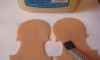
The mold box will make up five individual
pieces: base, left side, right side, top and bottom.  The first step is to
cut out the base.  To do this measure at least 1/2 to 3/4 space around the
sculpture.  This includes both the top and bottom areas of the sculpture. 
Using a ruler and pencil draw out the lines on the Xacto board.  Now I like
to first draw a center line that is 1/2 - 3/4 inches from the edge of the Xacto
board and then draw out my other measurements from there.  This line
represents where I will line up my piece (example show in the attached image)

Using the Utility knife and a ruler, cut out
the base piece.  Next we need to measure and cutout the two sides and top
and bottom pieces.  The length for the sides is pretty easy since it will
match the same exact measurements as the length for the base.  The height
is a little different story.  To make sure there is plenty of space for the
silicon I like to measure out a height that is at least 2 - 3 inches taller than
my sculpture (too much height is better than too little height so if you are
unsure add several more inches to the height of the peice).  The left and
right sides will mirror each other so cutout a length and height that works with
your sculpture. 

For the bottom and top pieces, the width for
these will match the width of the base.  The height will match the height
that you used for the left and right sides.  Both the top and bottom pieces
should be the exact same dimensions.

** Using a ruler to line up the edges helps get
cleaner and straighter cuts.


Mold box - step 4

Step Four - Clay bed

  1. Using the Klean Klay, build out a clay bed
    for the sculpture. 
  2. The clay bed should be at least 1/2 - 3/4
    inches deep. 
  3. Next lay the piece in the clay bed and start
    adding clay walls.

Since we are building a two piece mold, we need
to basically cut the sculpture in half with our mold box.  You will need to
build a clay wall that covers half of your piece.  In my example I have
placed an imaginary line that flows through the length of the piece.  The
exposed part of the sculpture will represent one half of the mold while the part
of the sculpture that is covered with the Klean Klay will later on represent the
second half of my mold.  It is important that you carefully plan your
design at this phase.  You want to be careful of weird angles and sharp
undercuts since there will be potential for the resin to trap air into the mold
when it is time to create a cast of your sculpture  (air bubbles in resin
create holes in the sculpture cast).  When you pour resin into your mold
think about how the liquid resin will flow and how the air bubbles will move
within the spaces.  Since air flows upwards, you need to try to design a
layout that prevents the air bubbles from getting trapped in corners and other
areas of the mold.


Mold box - step 5

Step 5 - Clean up the clay around the sculpture. 

Using Alcohol and a paint brush clean up the
clay that is butted up against your piece.  Make sure that the clay fully
surrounds the piece.  Silicone when poured will pick up the finest details
and holes in the clay wall will result in silicone seeping through and covering
parts of the sculpture that is in the clay bed.


Mold box - step 6

Step Six

  1. Outline the sculpture with a thin wire or
    snake of clay.  In my example I used old speaker wire but you can use
    just about anything here.  The reason why I have surrounded my sculpture
    with wire is because I will create cuts in the silicone that help the trapped
    air escape from my mold.  Just make sure that the wire does not touch the
    sculpture.
  2. Using a paint brush or sculpting tool create
    little divots into the sculpture.  These will form keys and will help our
    mold halves fit together like when you snap two Lego’s together.


Mold box - step 7

Step Seven - Building the mold box walls

Since we already have our sides and top and
bottom pieces cut out all we have to do now is put everything together. 
This is where packing tape really comes in handy.  Tape the sides and
bottom and top pieces together to form a box.  Where the corner meet, add a
strip of tape so that there are no openings for the silicone to slip through.


Mold box - step 8Here
is an example of my completed mold box.


Mold box - step 9And
a few more examples of mold boxes for pieces in different sizes and shapes.
 

Next lesson - Coming soon

Previous lesson - Making a Mold - Step One

tag:

Popularity: 33% [?]

Posted in Sculpting Tutorials | No Comments »

Smoothing Wax

February 12th, 2009 by goregt

From my experience there is a vast difference in the amount of effort that is required to smooth out wax sculptures versus sculptures sculpted with any of the polymer clays.  The underlying principles and concepts are the same but wax, when cooled, is a much harder medium and thus requires quite a bit more work to achieve the desired result.  Keep in mind that this is under the assumption that you smooth out your polymer clay sculptures prior to baking, which I have always done in the past.  Some sculptors will bake their polymer clay sculptures and use wet sanding techniques for the final smoothing stages (this process will exponentially increases the amount of work needed to smooth out the sculpture).

The first step in the smoothing process is to clean up the sculpture by using various loop tools. Loop tools really are essential when sculpting with wax and the smaller loop tools can be used to help blend shapes together and smooth out some of the hard lines in the sculpture.  I do not strive for perfection at this stage since I will later on incorporate other processes to smooth out the piece.

Once we are done with the loop tools the next step is smooth out the wax even more by using odorless mineral spirits and a stiff paint brush.  I would associate the use of odorless mineral spirits as the same reasoning for using 90-99% alcohol on sculptures created in polymer clay.  Odorless mineral spirits dissolves the top layer of wax but unfortunately does not work as well on wax as alcohol does on Super Sculpey (a lot more time needs to be invested smoothing out the wax as compared to using alcohol on polymer clays).  The key is to start out with a very stiff brush and over time work towards using a softer brush.   The stiffer brushes are used for breaking down the rough shapes and tend to give the sculpture a soft matted look.  The smoother brushes smooth out the matted look and help to start moving the sculpture towards a more polished looking piece.  Also keep in mind that while working with odorless mineral spirits a wax residue will build up on the brush so you will need to use a paper towel or rag to periodically clean the brush.

If your sculpture still needs additional smoothing then the next step is to use fine sandpaper.  Sandpaper is not always necessary but there are times when I can’t quite get the area as smooth as I would like with just the odorless mineral spirits.  The key to using sandpaper is to put the sculpture in the freezer for about 10-15 minutes before moving on to this step (follow safety precautions since you are placing chemicals in the freezer (i.e. residue for the odorless mineral spirits).  This helps harden the sculpture for sanding and really helps if you wet sand the wax pieces (an example of wet sanding is sanding the sculpture while running water over it from a faucet).  If you choose to not wet sand the piece then you will most likely need to do a quick cleanup using a soft brush and odorless mineral spirits after the sanding is complete.

The final step in the smoothing process is to use a wet rag on the sculpture.  If you had recently used odorless mineral spirits on the sculpture then you will want to let the piece sit for a bit before moving on to this step.  Odorless mineral spirits can make the top layer of the wax a little tacky so it is best to set the sculpture aside awhile so that the wax can get back to its original state.  Once the sculpture is ready, apply the wet rag to the sculpture with the same approach as you would use to for sanding the piece.  This process does take some elbow grease but once complete the sculpture will have a smooth surface with a nice sheen to it.
 

 So in conclusion there is a lot more work involved with smoothing out wax versus polymer clays such as Super Sculpey.  The overall process really is not that hard, it just takes time, patience and some experience to get the desired results.

tag:

Popularity: 35% [?]

Posted in Sculpting Tutorials | No Comments »

Making a Mold - Step One

December 16th, 2008 by goregt

Mold making is one of those tricky little things that can be very simple or complex depending on what it being molded.  Over the next few tutorials I’ll show you how to create both a simple and a complex mold all from the same sculpture.  The sculpture that I will be using for the tutorial is complex in design with tons of detail work and will serve as a great example that no subject matter is too detailed to be molded.

Step One - Breaking (cutting) the sculpture into individual parts:

Moulding individual partsUsually step one takes place during the design phase of sculpting.  The goal is to break or “cut up” the sculpture into individual parts for ease of molding.  Once molded, the individual parts will fit together like a puzzle or an even better example a model (like model cars and airplanes).

Now the process on how to cut up the sculpture into the individual parts is an entirely different tutorial that I will have to cover at another time.  However, if you are squeamish about cutting up your hard work, I highly recommend learning how to make a mold on a simple design first and then once your comfort level has increased move onto a more complex design.  This is exactly what I did when I learned how to create a mold; I started with a very basic sculpture and became familiar with mold making process.  After I gained some experience I quickly was able start molding more complex pieces.  These days I have no issues cutting my sculptures into pieces but back in the day that was never an option for me.

Step Two - Materials needed:

  • Silicone - rubber used to make the mold
  • Foam board
  • Packing tape
  • Scissors or a box cutter (or knife)
  • Klean Klay

Silicone - The silicone that I personally use for molding is called Mold Max 20 and can be purchased from Smooth On (http://www.smooth-on.com/).  I have been using Smooth On’s products for a few years now and I am very happy with their quality.  There are a ton of other different brands of silicone out there but for my tutorials I will be exclusively using Mold Max 20. 

Silicone is not cheap, no matter whom you buy it from, and a gallon of Mold Max 20 at the time of this writing cost a little over $90 USD plus additional cost for shipping and handling.  Just to give you an idea on cost, the silicone used for the sculpture in this example cost me a little over $300 USD and that was only the cost for the rubber.  I still have additional cost for the other materials that make up the mold.  However, the cost does not stop there, there is also cost for the material to cast the sculpture, resin, and it can be quite pricey as well.

Foam board and packing tape is very inexpensive and can be purchased at your local Wal-Mart or craft store.  The foam board (also called X-acto board) and packing tape are used to make a box for your mold (I will cover this in detail in the next lesson).

Klean Klay is only used with two part molds and I will cover in more detail in the future lessons.

Mold making is a very expensive adventure but if you want to create replicas of your original work then making a mold is a necessity whether you do it yourself or pay someone else to do it for you.  My best recommendation for making a mold is to start small and work your way up to more complex projects.  As I stated earlier, some of my first molds were of very basic sculptures and as my confidence grew so did the complexity of the sculptures that I molded.  Molding is expensive, messy, time consuming and in my honest opinion not a whole lot of fun but the reward of being able to cast your original works is well worth all the effort. 

Until the next lesson,

Gerald Gore

tag:

Popularity: 100% [?]

Posted in Sculpting Tutorials | 2 Comments »

FUSE Review

December 8th, 2008 by goregt

Recently I had put together a little article that outlines some of the key differences between sculpting with wax and polymer clays (http://www.polymerclayfan.com/sculpting-with-wax-vs-polymer-clay.htm).  In hindsight, the review was more of a comparison between sculpting with Super Sculpey and a relatively new wax called  FUSE.  I think it is important to point out that not all polymer clays are created equal and the same case could be made for wax.  As of the writing of this article, FUSE is the only wax I have ever tried so the chances are that my opinions regarding sculpting with wax could drastically change from one wax product to another.

Why Wax?

I have wanted to experiment with wax for a few years now and the main reason why I never took the plunge is because  I have read repeated cases that wax can be a real challenge to master.  From my limited understanding of the medium, most waxes are very hard at room temperature and require some form of heat to be able to manipulate the material for sculpting.  It was also my understanding that sculpting with wax is a very time consuming process. 

For me, at this stage in my life, sculpting is really just a hobby.  On a personal level I see it more as a passion but in reality most of the hours in my day are invested in a full time job and my family.  However, that being said, I’m a firm believer that every time you challenge yourself with your art, you build the skills to become a better artist.  The problem I always had was that I could never find enough motivation for me to justify the time investment that it would take for me learn how to sculpt with wax.  I finally took the plunge with wax because I have reached a stage where I am tired of always working with armatures.  Some people really enjoy the armature building steps of sculpting but unfortunately I am not one of them, to me it is more of a chore than a pleasure.  What I enjoy is the process where I am manipulating the clay to bring the ideas in my head into fruition. 

During my research on which wax I should try I had stumbled upon a  few post about a new product which a lot of people were calling the “holy grail” for wax.  The new wax is called FUSE and has quickly gained a reputation as being one of those waxes that helps merge the worlds between the polymer clay and wax artist.  I had nothing to lose, except time,  and figured why not give this new “holy grail” a try.    I really cannot honestly compare FUSE with other waxes because it is the only wax that I have tried to date.  However, I can give a good comparison to every other type of clay that I have used (WED, water based, polymer clay, etc) and I can honestly say that it is a magnificent medium to work with.  That being said, for me it was a new medium and did take quite a bit of time to master.  Before we dive into the details of using FUSE, I would like to answer a few of the basic questions that were running around in my head when I was first trying out this new product.

  • Is there a learning curve for this material?  Yes.  The good news is that the sculpting knowledge I gained from sculpting with polymer clay has helped me shorten the learning curve of sculpting with wax.  However, one of the challenges is that you have to learn to do things differently with wax.  For example, smoothing out wax is quite a bit different then smoothing out Super Sculpey but the underlining principles I learned from sculpey has helped with learning how to smooth out wax.
  • Is it more time consuming to sculpt with FUSE than polymer clays such as Super Sculpey?  With my current experience level - yes.  However, I have found that my sculpting speed is drastically increasing the more familiar I become with the material.

Requirements for Sculpting With Wax (FUSE)

FUSE is no different than any other wax in that heat is still a necessary ingredient and is especially important in the early stages of the sculpting process (blocking out the sculpture).  I have been able to heat up small pieces of FUSE by rolling the wax between my fingers, having the heat from my hands soften the smaller pieces of wax, but overall an external heat source is really a requirement when blocking out large areas of the sculpture.  Once you get to the finer detailing, you can then switch to more of a carving sculpting method.

Key Properties That I Have Noticed With FUSE

The biggest  difference that I have noticed so far with wax is that it is a much harder medium than any of the polymer clays I have tried.  The hardness of wax is great when working on fine details but does present itself as a challenge early on when building out the rough shapes.  I use both addititive and subtractive techniques when I sculpt so a very large portion of my sculpting time, regardless of the medium, is used to build and bulk out the different areas of the sculpture.  As already stated, you have to heat wax to be able to work with it and in doing so here are some of the key things that I have noticed:

  • When heated FUSE kind of feels like bread dough (only a lot hotter) and smells like a mixture of honey and baby powder.
  • The “bread dough” consistency is more ideal when blocking out the sculpture, it is soft and can easily be manipulated into rough shapes.  However, when building out the more detailed areas I prefer to keep the wax at a more solid state then the “bread dough” consistency.  For the smaller areas I usually just heat the wax to a point where it is still a little hard but my fingers are able to easily manipulate the shape of the wax.
  • The baby powder/honey smell is just and extra plus :-)

Main Tools That I Use With FUSE

Microwave - The microwave really is a great source for heating large amounts of the wax (used more early on in the bulking out stage).  The wax cools relatively quickly so I have found that the microwave really isn’t practical when building out the smaller and more defined areas of the sculpture. 

Hair Dryer - I prefer the heat gun but mine died and I use my wife’s hair dryer when she is not looking :-).  I have found that a hairdryer works perfectly when bulking out smaller areas.  The key is to heat a small section of wax and from there apply it to the sculpture.  Using heat is pretty easy to do but you have to be careful not to burn yourself (been there, done that).

Wax smoothing tools - Smoothing out wax is more of a challenge then the process that I use to smooth out Super Sculpey.  Outlined below are a few techniques that seem to be working so far (I use all three techniques in the order shown below):

  • Loop tools - loop tools are mandatory in my opinion when using FUSE and the smaller loop tools help to achieve a smoother finish in the wax.
  • Odorless Mineral Spirits - this is the 99% alcohol substitute for wax.  The mineral spirits will dissolve a thin layer of wax from the sculpture in a similar manner as alcohol smooth’s out polymer clays.  I recommend that you have smoothed the sculpture down to the best of your abilities using other methods (loop tools, wet cloth) before using the mineral spirits.
  • Wet cloth - works well on larger areas but not ideal for the smaller hard to reach areas on a sculpture
     

Final Comments

In conclusion I am pretty happy with the overall results of my first experience with wax.  FUSE helped me shorten the learning curve from being almost an exclusive polymer clay sculptor to learning how to become a wax sculptor.  There is still a lot for me to learn out there but from my initial experience if you are wanting to get your feet wet with wax then I highly recommend giving FUSE a try.

 You can learn more about FUSE and purchase it from http://willowproducts.com/

tag:

Popularity: 90% [?]

Posted in Sculpting Tutorials | No Comments »

Sculpting with Wax vs Polymer Clay

July 31st, 2008 by goregt

Stop the press, isn’t this site suppose to be about polymer clay sculpting, after all the name of the site is Polymer Clay Fan! Yes you have read the title to this post correctly, I’ve started playing with wax lately and although I’m still wet behind the ears I thought why not put together a little post to compare the two mediums. I’m sure a few diehard polymer clay artists may snub their nose at this post but I recommend reading through the entire article before jumping to a conclusion. This isn’t an article about discrediting wax or even polymer clay, it is just my observation of the positives and negatives the two different mediums have to offer.

Before I begin, if I had to make one disclaimer I would like to state that these are only my first impressions of wax and over time my opinions may change. Not all waxes are created equal and the wax that I chose to use for my little experiment is called FUSE. I’ll do a write-up on FUSE in another post but the key reason why I chose this wax over others is that when heated it creates a consistency like dough. This way you can quickly mold a rough shape and start working on refining the sculpture from there.

Key benefits for using wax

1. No armature is needed - A lot of people don’t mind building armatures so if you are one of these individuals then for you this really isn’t a benefit for using wax, for me it is the KEY ADVANTAGE for using wax. I really hate working with armatures so this was one of the main reasons why I decided to give wax a try.
2. Sculpture can easily be cut up into pieces for molding (really only an advantage for those wanting to replicate their work). I don’t intend to mislead anyone here, you can cut baked polymer clay sculptures into separate pieces for molding as well, and it’s just so much easier with wax.
3. When cooled wax is very hard - When wax is in the hard state it is very hard and you do not have to worry about accident tally adding your fingerprints or smudging the details on a piece when handling it. With the polymer clays, baking and/or partial-baking are required to avoid messing up the details (either that or you have to avoid touching the finished areas at all cost). When I sculpt smaller pieces, like faces, I like to hold the sculpture in my hand while working, the disadvantage of polymer clays, like Super Sculpey, is that the clay has a soft and sponge like feel to it which makes it very easy to mess up the details. Dropping a piece or accidentally grabbing the wrong section of the sculpture can quickly undue hours of hard work in the blink of an eye.
4. Wax can be reused - one the mold has been created you can melt the sculpture down and reuse the wax for another piece. In the long run this could help offset some of the cost of creating a mold.
5. Smells good - My FUSE smells like baby powder and honey when heated, now how awesome is that ;-)

Key disadvantages with wax

1. Not ideal for one-of-a-kind sculptures- unlike polymer clay you simply can’t just bake wax to create a permanent sculpture (doing so will actually cause adverse effects). A mold is will be required if you are looking at creating a permanent sculptures. If you are looking at casting a small run then a mold would be needed with any medium that you choose but for a one-of-a-kind piece it really isn’t the ideal sculpting medium.
2. Requires heat for sculpting - you either have to keep running back and forth to the microwave or come up with some other source of heat to soften the wax (hair dryer works well). Polymer clay only requires a little kneading and it is ready to go (much easier to work with in this manner).
3. You better have metal tools - I use metal tools anyways when I sculpt so not a biggie for me but if you use plastic tools you may want to invest in a set of dental tools before sculpting with wax. As stated earlier wax is very hard when cooled and will put a strain on any tool that you use.

In conclusion both wax and polymer clays have their advantages and disadvantages and I personally think most people would benefit from learning both mediums. It is easy to get comfortable with one medium or even one sculpting style; however I believe you really start to grow when you push yourself. Whether you are sculpting something you have never sculpted before or sculpting with a different medium, the person that wins in the end is you. With sculpting I always try to challenge myself with each new piece and for most the projects that I start there is always a little voice in the back of my head wondering if I will be able to “pull it off”. When I purchased my wax I really had no clue on what to do. I ended up reading information here and there on the web on the different techniques for sculpting with wax but in the end I learned what I know now from just trial and error. I’m still just an infant in my knowledge of this material but with that said I’m confident I can put out the same level of quality of art as I do with polymer clay. I also believe that the next time I sculpt with polymer clay my experience with wax will help me become a better sculptor in that medium as well.

There are no permanent plans to trade in my Super Sculpey for wax but I do plan to use wax in more of my future pieces. I do still have a love hate relationship with my Super Sculpey (love the clay and hate the armatures) and look forward to adding some of the new skills I’ve acquired with wax sculpting to my next polymer piece. In the end it really is sculpting that I love and the material used is just a means to end. So for all you die hard polymer clay artist out there, put down your shields, try something new and over time watch the quality of your polymer clay art benefit from it in the end.

tag:

Popularity: 78% [?]

Posted in Sculpting Tutorials | 6 Comments »

Fixing the left arm

July 13th, 2007 by goregt

Working on the left arm

I think the theme for my latest tutorials is going to be about fixing mistakes.  I did not do a very good job with the armature at the beginning of this sculpture and I am now paying for it.  Basically the clay is too heavy for the shoulder and arm to support all of the weight.  I’m now having issues where the shoulder is splitting in half because of the weight of the arm and the fiddle. 

Right now the only way that I see to resolve this issue is to bake the shoulder and arm as one piece and attach it to the Fiddler’s torso at a later time.  Most likely I’ll still have a weight issue at the point I attach the arm at so my workaround for that will be to partially bake the entire area where the shoulder attaches to (I’ll cover that in more detail later on)

* This sculpture is created with Super Sculpey.

fixing the arm Using a sharp cutting took I basically removed the arm. 
   
fixing the arm I decided to change the textures a bit on this piece.  I’m thinking about having this sculpture cast in bronze at a later date so I’m trying to come up with a more artistic look for the skin texture.  The texture I have here gives me a feeling a movement as if the muscles were twitching and flexing while the Fiddler plays the fiddle.
   
fixing the arm Smoothing out the textures with rubbing alcohol.
   
fixing the arm The goal here is to only bake part of the sculpture instead of the entire arm.  That way the clay covered by the aluminum foil is still soft and will be easy to attach to the Fiddler’s torso.  Well, I cooked it too long and it didn’t work.  No biggie, I can still add the arm to the torso, it will just take a little more work.
   
fixing the arm A picture of me attempting to partially bake the arm.

Next lesson - Coming soon

Previous lesson - Fixing the forearm

Back to the series home page

tag:

Popularity: 89% [?]

Posted in Sculpting Tutorials | 3 Comments »

Fixing the forearm

July 13th, 2007 by goregt

Fixing the forearm

Well, I’m definitely not perfect and I am also not afraid to show my mistakes.  I do learn a lot from my mistakes and I think posting them on this site also helps others learn as well.  If you have been following the tutorials on this site for awhile then you may remember me mentioning that you need to be careful when bulking out a sculpture to aluminum foil.  Well, now you are about to get a good example on why I said that. 

I think the attached picture explains everything quite well ;-).  However the cool thing about polymer clay and mistakes is that you just fix them.  Yes it may slow you down a bit but the mistakes none-the-less are still fixable.  I ended up having to dig out quite a bit of aluminum foil but it didn’t take too long for me to get back on track.

If you end up making a mistake while sculpting just chalk it up as a learning experience, fix it and then move on.  Mistakes really are not the end of the world and in this case was just a little bump in the road.

Next lesson - Fixing the left arm

Previous lesson Sculpting the ears

Back to the series home page

tag:

Popularity: 87% [?]

Posted in Sculpting Tutorials | No Comments »

Sculpting the ears

July 13th, 2007 by goregt

Sculpting the Fiddler’s ears

I’ve been using these rough placeholders as ears for awhile now and it has gotten to the point where they are starting to bug me.  Ears take some patience to sculpt also so I have been putting them off for awhile. 

Since I am sculpting the devil in this piece I decided to give him pointed ears shaped like an elf’s.  Just another tweak to add to the overall look of the piece.

* This sculpture is created with Super Sculpey.

sculpting an ear in polymer clay Step one is to design the rough shape of the ears.
   
sculpting an ear in polymer clay Now that I have my rough outline, the next step is the start defining the outer ear.  Little snakes of clay do the trick here.
   
sculpting an ear in polymer clay Now the same goes for the inner tubes and grooves in the ear.  I use additional snakes of clay to create the canals in the ear.  Just build out the individual shapes slowly and everything will come together.
   
sculpting an ear in polymer clay Now that I have my ear the way that I want it I take a brush and rubbing alcohol to smooth everything out.
   
sculpting an ear in polymer clay And a look of my ear with a little distance
   
sculpting an ear in polymer clay …. and another angle shot of my ear.

Next lesson - Fixing the forearm

Previous lesson Spicing up the neck

Back to the series home page

tag:

Popularity: 86% [?]

Posted in Sculpting Tutorials | No Comments »

Spicing up the neck

July 13th, 2007 by goregt

Spicing up the neck

I’m a very dynamic sculptor (I’ve said this before and I am sure I’ll say it again).  With my own original art I usually have a basic idea of the sculpture I want to create but once I get started I just kind of make things up as I move along.  Personally I view this as a strength and not a weakness because the final design usually ends up better than the original vision.

That being said the new design to the horns has given me an idea on how I can spice up the rest of the sculpture a bit.  I’ll start with changes to the neck in this tutorial and will move on from there in the later lessons.

* This sculpture is created with Super Sculpey.

sculpting neck in polymer clay This is actually a pretty easy tutorial that creates a dramatic difference in the look of this piece.  The first step is to take little balls of clay, at various sizes, and press them into the neck.* Ignore the ear for now (I know it looks terrible).  I will cover sculpting the ear in the next lesson.
   
sculpting neck in polymer clay Using one of my sculpting tools a press the edges of the balls of clay into the neck.
   
sculpting neck in polymer clay Smooth everything out with a little alcohol and there you have it.  Note:  I will go back later and add the skin details to the bumps.

Next lesson - Sculpting the ears

Previous lesson Changing the design of the horns

Back to the series home page

tag:

Popularity: 84% [?]

Posted in Sculpting Tutorials | No Comments »

Sculpting Tribal Arm

July 13th, 2007 by goregt

Attaching the arm

I think the pictures in this tutorial explain everything pretty well so just follow the images from left to right.  Since my arms will be dangling at the side this method works pretty well.  If you plan to pose the arm or add additional weight to it by placing something in the hand then you would want to build an armature that supports the arm better then what I have shown below. 

* This sculpture is created with Super Sculpey.

polymer clay tribal arm frame   polymer clay tribal arm clay base
   
polymer clay tribal arm polymer clay tribal arm
   
polymer clay tribal arm polymer clay tribal arm
polymer clay tribal arm

Next lesson - Coming Soon.

Previous lesson Sculpting the tribal torso

Back to Indigenous Allure home

tag:

Popularity: 83% [?]

Posted in Sculpting Tutorials | No Comments »

Next Page »