Polymer Clay Fan

Free Sculpting Tutorials

Search Results

Pumpkin Sculpting

Posted by goregt On October - 8 - 2009

Hey Gang, with Halloween fast approaching did you know that there is a really cool and great way to really impress your friends and family with your talent?. Although this website centers more around sculpting with polymer clay and wax, there are a lot of other types of materials that you can easily sculpt. Metal and wood seem obvious answers here but how about pumpkins. Can you think of any better way to spice up your Halloween this year than sculpting a really cool looking pumpkin?

Now I don’t want to be misleading here, sculpting pumpkins in very different than sculpting in wax or polymer clay. It’s kind of like sculpting with wood, the process is 100 percent a subtractive. You have to carve away the flesh of the pumpkin and any mistakes made could force you to reshape or even change your design. I know it sounds challenging but with a little practice it really is not that bad and most important of all it is a ton of fun! Read the rest of this entry »

If you liked this free tutorial, buy me a cup of Joe (Suggested: $3 a coffee or $7.5 if I'm getting spoiled at Starbucks)

Popularity: 25% [?]

If you enjoyed this post, make sure you subscribe to my RSS feed!

Tribal Back – 2

Posted by goregt On October - 1 - 2009

In the last tutorial I briefly went over how I like to draw out a rough outline of the different muscles. I use this trick on quite a few places on the body and it really helps be understand and build out the individual shapes. For example, I like to draw out the individual muscles when I sculpt muscular arms and very lean abs. The back also has a lot going on so even though my outline is pretty rough it still helps me break down the back into the individual muscles (or shapes).

The first step is to separate my back into two halves. Now you can’t just simply carve a line down the center of the back, otherwise your sculpture will look like it has a canon going down the center of it. To make the back look more natural I will blend the two halves of the large back muscles (latissimus dorsi) into the area of where the spine is located. This task is easily accomplished by carving the center edges of the back until it gently slopes to the spine. I keep working both halves of the back until I get a look that I am happy with. Read the rest of this entry »

If you liked this free tutorial, buy me a cup of Joe (Suggested: $3 a coffee or $7.5 if I'm getting spoiled at Starbucks)

Popularity: 31% [?]

If you enjoyed this post, make sure you subscribe to my RSS feed!

9 the Movie

Posted by goregt On September - 28 - 2009

This past weekend I took my kids to see the movie 9.  For those that are not familiar with the movie it is a post apocalyptic story where the human race has been annihilated by machines.   The basis for the plot has been used over and over again for decades now but the story of 9 separates itself from the predecessors in that in a last effort to save humanity a brilliant scientist has given his own life to bring life to nine different rag dolls.

I personally would rate 9 as one of the best animated movies that I have ever seen.  I loved the way the story unfolded before my eyes and the quality of the animation was nothing less than superb.  The characters and the creatures in the movie were brilliantly designed.  It was no surprise finding out that Tim Burton was one of the producers of this movie and you could feel his presence in both the landscape and character designs.

For those of you that have little ones and are wondering if this movie is appropriate keep in mind that 9 is rated PG-13.  There is a reason for the PG-13 rating and the movie is very intense with some scary action sequences.   This movie was a little more intense than I expected and some of the scenes were pretty scary for my six-year-old (I guess I won’t be winning the “Dad of the Year” award this year).  Don’t get me wrong my son did enjoy the movie but if you also have little ones you may want to screen the movie first a then decide if your own kids are up to it. Read the rest of this entry »

If you liked this free tutorial, buy me a cup of Joe (Suggested: $3 a coffee or $7.5 if I'm getting spoiled at Starbucks)

Popularity: 22% [?]

If you enjoyed this post, make sure you subscribe to my RSS feed!

Calipers

Posted by goregt On September - 18 - 2009
Caliper

Caliper

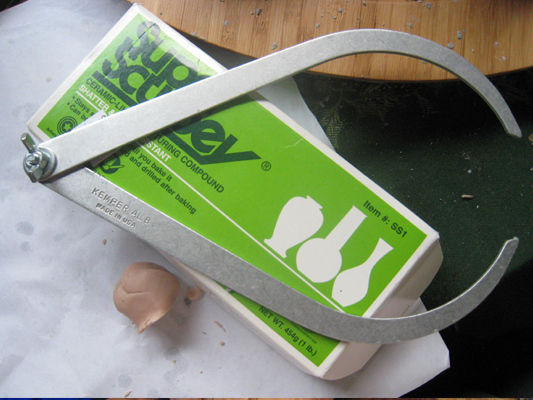
If you ever plan to sculpt anything that is symmetrical in design then a caliper is a must. Calipers are an important sculpting tool because they help you accurately measure of length, width and distance of the different pieces that make up a sculpture. There may be some sculptors out there that can accurately sculpt a symmetrical design by sight alone but for us mere mortals the caliper is a must have tool.

If you have been sculpting for some time and do not own a caliper, there is a very strong chance that at one time or another you still have used a very crude and basic caliper tool. What I’m talking about is your thumb and index finger. Have you ever sculpted an arm on one side of the body and use your thumb and index finger to measure the length so that you could accurately match it to the arm on the other side of the body? How about when you sculpt a face or a torse, are you like me and draw a center line seperating the object into two? Did you ever use a string, a ruler or your fingers to check that both halves of the face or torso were even in both the width, length and thickness?

If you answered yes to any of these questions then you have turned your thumb and index finger into a very crude caliper. The problem with the “homemade” version of caliper is that it doesn’t always provide the most accurate results. A professional caliper eliminates the guessing game and gives the artist the ability to take measurements with ease.  Unlike some of the other tools that are required for sculpting, this is really only a onetime investment.  You wont use it all the time but it is a real gem in those situations when an accurate measurement is needed. Read the rest of this entry »

If you liked this free tutorial, buy me a cup of Joe (Suggested: $3 a coffee or $7.5 if I'm getting spoiled at Starbucks)

Popularity: 12% [?]

If you enjoyed this post, make sure you subscribe to my RSS feed!

Changing the design of the breast – 3

Posted by goregt On September - 17 - 2009

This lesson is a continuation from the last one in the sense that I’m still working on adding and subtracting clay here and there to finalize the shape of the breast. The nice thing about sculpting with a polymer clay like Super Sculpey is that you can easily smooth out the clay with just your fingers. I’ve included some pictures below where I show how I shaped and smoothed out my sculpture using my thumb. It is quick and easy to do and I try to use my fingers as much as possible when smoothing out larger areas in the clay (belly, back, arms, etc).

Keep in mind that you if you can get the sculpture perfectly smooth with your fingers you can always use rubbing alcohol and a brush to smooth out the clay even more. The particular sculpture will end up having a texture to it by the time I’m done so my main goal at this point is to just get the shapes down. Read the rest of this entry »

If you liked this free tutorial, buy me a cup of Joe (Suggested: $3 a coffee or $7.5 if I'm getting spoiled at Starbucks)

Popularity: 9% [?]

If you enjoyed this post, make sure you subscribe to my RSS feed!

Changing the design of the breast – 2

Posted by goregt On September - 16 - 2009

My thought process on sculpting any form that I find challenging is to break the design down into simple shapes. Lets take a hand for example, if you break it down into individual shapes the fingers are made up of small cylinders while the palm of the hand is made up of a square. Anyone can sculpt a square and a cylinder so if you think about it anyone can sculpt a very basic design for a hand. If you take it a step further you can also then break your individual parts of the hand into basic shapes. For example, the knuckles are shaped like circles while the fingernails are shaped like small squares. In just a few steps your hand has evolved from a very simplistic design into one that is a little more complex with the addition of the the knuckles and the fingernails. From this point on you just keep refining the individual shapes until you end up with a realistic looking hand. Read the rest of this entry »

If you liked this free tutorial, buy me a cup of Joe (Suggested: $3 a coffee or $7.5 if I'm getting spoiled at Starbucks)

Popularity: 8% [?]

If you enjoyed this post, make sure you subscribe to my RSS feed!

Changing the Torso

Posted by goregt On September - 14 - 2009

There is a magic word that applies to a lot of the elite sculptors and one that I personally believe every artist, sculptor or not, should become familiar with. It is one of those words that could undoubtedly help you become a very talented and skilled artist. For those artist out there that are already very skilled in their craft, it will help you improve your skills that much more.

The magic word that I am talking about is persistence. The reason why persistence is important for artist is because those that sincerely choose to be persistent in perfecting their craft really never give up at improving their skills. For example, if you have a hard time sculpting hands the key is to keep working and improving your skills until you can successfully and easily sculpt hands. No matter how many hours it takes and no matter how many times you have to start over you never quit until you can successfully reach your goal.

So where am I going with all of this? Basically the sculpture in this tutorial has been sitting on a shelf unfinished for over two years now. I’m now working on it again however, as one would expect, my skills over the last couple years have grown and I can now see a lot of things that I need to change with this sculpture. One of the main issues that I have with this piece is the shape and the design of the breast. I never really liked my original design for the breast and although I had spent countless hours on this sculpture I always knew it would be something that I would have to revisit at a later date. The problem is that in the original design they look augmented to me, they almost look as if they have no weight to them.

I’ve been working on resculpting the breast and over the next few tutorials I will walk you through how and why I did the design changes. What is not shown in the pictures in the upcoming tutorials is the amount of time I invested in learning how to sculpt just one breast. Now I have sculpted the female form before but as of this writing Indigenous Allure is my only nude. All of my other female sculptures have something covering their breast and although the design was not easy it was more simplified than sculpting a nude form.

I’m not going to lie, I’ve really struggled sculpting the breast on this figure. I’m not sure what the problem is, it is just a design that I have personally found challenging. I spent over two days on just one of the breast alone and through a lot of persistence have gotten the shape down to something that I am comfortable with. The hours that I have invested in sculpting just the first breast has helped me already improve my skills. The second breast, which will be demonstrated in the next tutorial took a fraction of the time to complete.

Don’t get me wrong, it is awkward for me to write an article on my difficulties for sculpting breast. However a few years ago I could have written the same article about my challenges when trying to sculpt hands or even hair. The point is that this is one of my areas of weaknesses today. However I know this is also an area that I can not only learn to master but also use to improve my overall sculpting skills. The key is to keep working at the design until I get it right. Whether it be two days or two months the key is to keep at the design until it clicks and eventually becomes easy for me. As I already stated my second attempt, although still under construction, was much easier than the first. I still have a long ways to go but my sculpting speed has already improved along with the way that I even look at the design. As much as I wanted to quit I stayed focus on my task and in the end I think that I will end up with a sculpture that I am happy with.

I’ve included some before and after shots of my sculpture (the design is still a work-in-progress and completed pics will be included at a later date). The uncensored pics are included in the link at the bottom of this page. Also the scars were removed to resculpt the torso, they are added back in a later tutorial.

Uncensored pics here.

Next lesson – Sculpting the Breast – 1

Previous lesson – Tribal Scars

Back to Indigenous Allure home

If you liked this free tutorial, buy me a cup of Joe (Suggested: $3 a coffee or $7.5 if I'm getting spoiled at Starbucks)

Popularity: 7% [?]

If you enjoyed this post, make sure you subscribe to my RSS feed!

Shiflett Brothers

Posted by goregt On September - 7 - 2009

From time to time I plan to write a post highlighting the artists that have had a positive influence on my own artwork. As I have stated many times before I for the most part am a self-taught sculptor. I’ve never taken a formal sculpting class and most of the techniques that I have learned up to now have been through a lot of trial and error (in some cases mostly error) and various forums and tutorials from other websites on the web. I still believe that I have a long ways to go before I become the skilled artist that I want to be, however I have progressed a lot over the past few years. I owe that progress to a lot of tutorials from a handful of sculptors that are out there today.

When I first started sculpting in November of 2003 the only clay that I was familiar with or even knew existed at that time was the water based clays. I had never even heard of polymer clay and naturally when I started my sculpting journey I picked right up from where I left off during my high school art experience. I did a brief two to three week sculpting project back in high school so I was already familiar with some of the basics for sculpting with water based clays (i.e. How to remove the air bubbles, making the sculpture hollow, firing the sculpture in a kiln but nothing on how to sculpt different forms, etc). Read the rest of this entry »

If you liked this free tutorial, buy me a cup of Joe (Suggested: $3 a coffee or $7.5 if I'm getting spoiled at Starbucks)

Popularity: 7% [?]

If you enjoyed this post, make sure you subscribe to my RSS feed!

Armature Wire

Posted by goregt On August - 27 - 2009

Armature WireIn a few of the older sculpting tutorials on this site I briefly talked about using an armature for supporting the sculpture. From time to time I receive emails from some of the newer members of the sculpting community asking exactly what an armature or armature wire is. So for the newer members to the sculpting family I thought I would go ahead and put together a brief explanation on what an armature is and why it is needed.

Basically the armature makes up the support system of the sculpture. A good analogy is to think of an armature as the skeleton for your artwork. In the human body the skeletal system is designed to support and hold up the body. The armature basically has the same type of role for your sculpture.

Read the rest of this entry »

If you liked this free tutorial, buy me a cup of Joe (Suggested: $3 a coffee or $7.5 if I'm getting spoiled at Starbucks)

Popularity: 19% [?]

If you enjoyed this post, make sure you subscribe to my RSS feed!

Mold Making – Step Five

Posted by goregt On August - 21 - 2009

After the silicone in the second half of our mold box has cured it is time to remove our sculpture from the mold.  I’ll go ahead and warn you ahead of time that in most cases your sculpture, or at least part of it, will get destroyed in the process.  The steps for this lesson is documented below.

  1. Remove the mold from the X-acto board mold box.  Carefully separate the two mold halves.
  2. If any of the silicone is sticking together (an area that was not covered with Vaseline), use an razor blade to carefully cut the silicone.
  3. Remove the sculpture from the mold Read the rest of this entry »

If you liked this free tutorial, buy me a cup of Joe (Suggested: $3 a coffee or $7.5 if I'm getting spoiled at Starbucks)

Popularity: 8% [?]

If you enjoyed this post, make sure you subscribe to my RSS feed!

VIDEO

Enter the video embed code here. Remember to change the size to 320 x 270 in the embed code.

TAG CLOUD

Recommended Sites

About Me

Nothing special, just a self-taught sculptor having fun with my art and showing all of you the tips and tricks I use to create my own artwork

Twitter

    Photos

    flickrRSS probably needs to be setup